

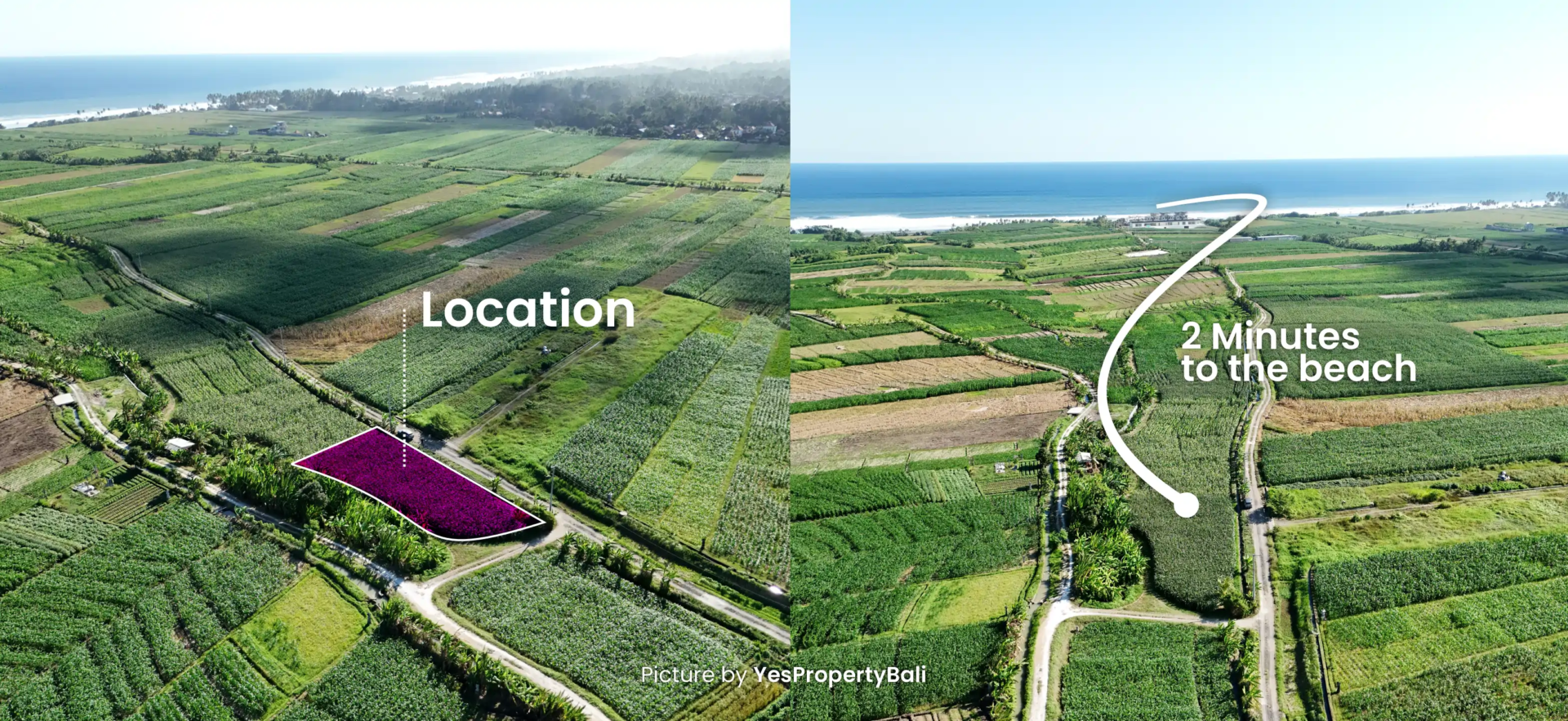
Every foreign buyer looking at real estate Bali has heard the same three names: Canggu, Seminyak, Uluwatu. That consensus is precisely why the smarter entry point in 2026 sits a few kilometers north of it, along the coastal corridor running through Cemagi, Munggu, Tumbak Bayuh, and Seseh — an arc locals and agents now shorthand as the Mengwi corridor. Recent market data shows this stretch recording the steepest year-over-year jump in transaction volume anywhere on the island, at a moment when land in central Canggu has already priced out all but the deepest-pocketed buyers. For an investor evaluating a villa for sale in this zone, the question is no longer whether the area has momentum. It is whether the returns hold up once the marketing gloss is stripped away.
Why the Mengwi Corridor, and Why Now
Cemagi is a coastal village wedged between Canggu’s built-up density and the rice-terrace calm around Tanah Lot. Land rents in parts of the corridor have risen sharply since 2021, driven by three converging forces: proximity to Canggu’s amenity base without Canggu’s saturation, a wave of new cafes and restaurants following the rooftop and beach-club crowd north, and constrained supply in the tourist-facing plots closer to Batu Bolong and Berawa. Villas in the area currently transact anywhere from the low hundreds of thousands of dollars up to the high six figures for larger beachfront builds, and undeveloped land is still available well below the per-square-meter cost of equivalent plots in central Canggu — commonly cited at 15 to 20 percent lower. That gap is the entire investment thesis: buy where the infrastructure and lifestyle economy is arriving, not where it has already priced in a decade of upside.
This is not a speculative fringe location. Upcoming road connectivity through the Mengwi sub-district and the steady southward spread of Canggu’s cafe culture are structural tailwinds, not one-season hype. But structural tailwinds are a reason to underwrite carefully, not a substitute for underwriting.
The ROI Case, Without the Inflation
Villa listings across Bali real estate marketing routinely advertise 20 to 30 percent annual returns. Treat that figure as a headline, not a forecast. A realistic net yield on a well-located, professionally managed leasehold villa in the Mengwi corridor sits closer to 7 to 12 percent annually, and reaching the top of that range depends on three variables working together: occupancy rates that hold up outside peak season, a management partner who is not quietly absorbing 40 percent of gross revenue in fees and commissions, and a design and price point that matches actual demand in the area rather than aspirational comparables borrowed from Uluwatu.
Run the arithmetic before you run the marketing deck. Gross rental revenue minus operating costs — which in a professionally managed villa typically consume 35 to 45 percent of gross income once platform commissions, staff, utilities, maintenance, and marketing are counted — is what actually reaches the owner. An entry price 15 to 20 percent below Canggu, applied against comparable nightly rates as the corridor’s amenity base matures, is what moves net yield from acceptable to genuinely compelling. It is a business you are buying into, not a lottery ticket.
Leasehold Structure: The Practical Choice for Most Buyers
For the large majority of individual foreign investors purchasing a single villa for rental income, leasehold remains the structurally sound choice — lower capital outlay than freehold-equivalent structures, a proven track record across thousands of completed Bali villa transactions, and legal protection that is sufficient when the underlying agreement is drafted and verified properly. The recurring failure point is not the leasehold structure itself; it is buyers skipping due diligence on land certificates, zoning status, and the specific terms of the lease agreement because a listing photo and a persuasive broker made the decision feel urgent.
This is precisely where Yes Property Bali’s exclusive legal partnership with Xokei Global Indonesia matters. Every leasehold or freehold transaction we facilitate is run through independent due diligence on title, zoning, and contract terms before capital changes hands — asset security is not an add-on service, it is the baseline we operate from.
Who This Corridor Actually Suits
The Mengwi corridor is not the right fit for a buyer who wants immediate five-star finish and a fully mature rental ecosystem on day one — that buyer should still be looking in Berawa or Uluwatu and paying the corresponding premium. It is the right fit for two distinct profiles: the rental investor underwriting a three-to-seven-year hold who wants entry pricing with room to appreciate as the area’s cafe and lifestyle economy matures, and the lifestyle buyer who wants genuine quiet, ocean-facing land, and proximity to Canggu without living inside its traffic. Both profiles are, ultimately, buying into the same underlying trade: patience for price.
The Bottom Line
Bali real estate rewards buyers who move ahead of consensus and penalizes those who chase it. The Mengwi corridor’s transaction growth is already visible in the data; the pricing gap against Canggu has not yet closed. For an investor searching villa Bali opportunities with a realistic, defensible yield case rather than a marketing number, Cemagi and its neighboring villages are worth underwriting seriously now — with the legal groundwork done properly, not assumed. If you are evaluating a specific plot or villa for sale in this corridor, our team can walk through the due diligence and the realistic return math before you commit capital.

Join The Discussion